


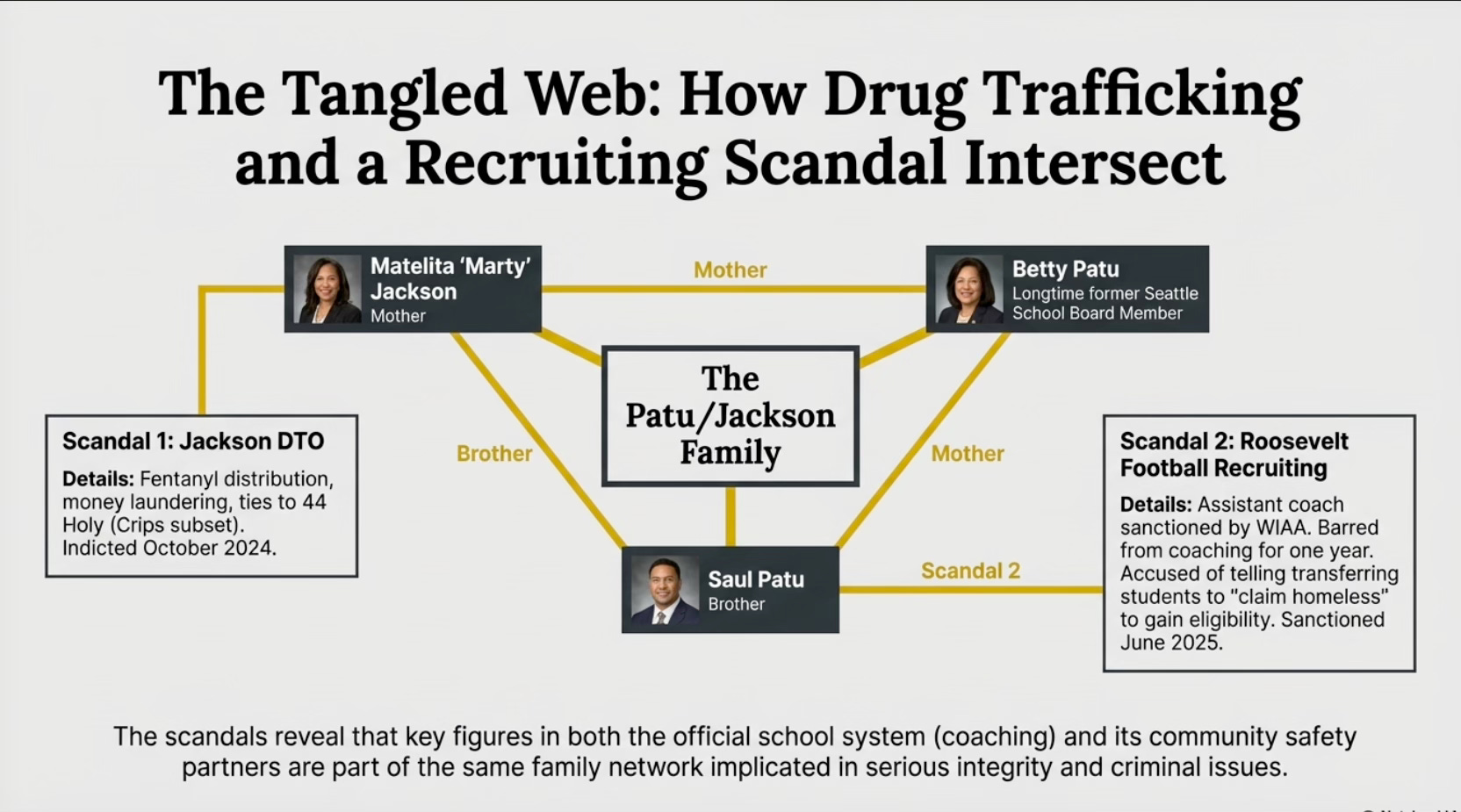
RAINIER VALLEY - In Seattle, few families were as deeply embedded in the mission to protect and mentor the city’s youth as the Jackson/Patu family. Led by a brother-sister duo, they were celebrated figures in public schools and community services, seen as guardians against the very dangers that plague urban communities.
Matelita “Marty” Jackson was the beloved anti-violence activist, the “Auntie of South Seattle,” contracted by the city to create safe spaces for children. Her brother, Saul Patu, was the respected high school football coach, molding young athletes into men.
Listen to the J425 Podcast on the Jackson Crime Family
But a darker, shocking reality has violently torn through that public facade. In a stunning turn of events, federal investigators indicted Marty Jackson for her alleged role in a multi-state fentanyl trafficking ring linked to fatal overdoses.
At the same time, a massive scandal exposed her brother, Saul, as a central figure in an illegal recruiting scheme that taught student-athletes how to cheat the system by fraudulently claiming to be homeless.
This is the story of a devastating betrayal. It unravels the disturbing duality of a family that built a legacy on public service while allegedly operating a criminal enterprise in the shadows.
It is a case study in how systems designed to protect the most vulnerable youth—those at risk of violence and those experiencing homelessness—were allegedly exploited for personal and criminal gain, shaking the foundations of trust in Seattle Public Schools and the communities they swore to protect.
“Auntie of South Seattle” or International Drug Kingpin?
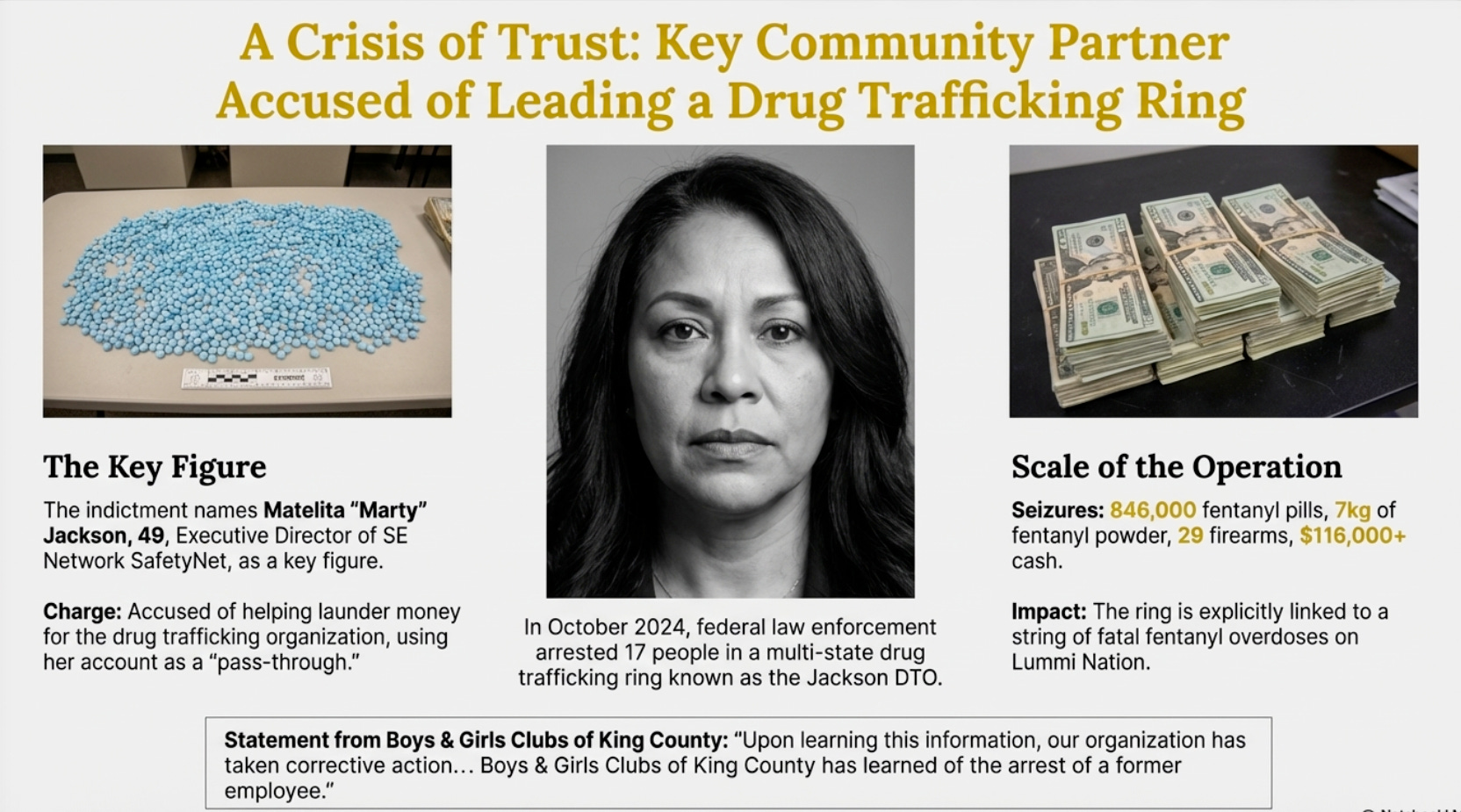
Matelita “Marty” Jackson cultivated an esteemed public persona as a pillar of her community. A feature in the South Seattle Emerald portrayed her as a lifelong servant of South Seattle, the executive director of the SE Network SafetyNet, and a figure so trusted by the youth she worked with that they called her “Auntie Marty.”
She was, in her own words, “motivated by love.” Her signature initiative, the city- and county-funded “Safe Passage Program,” established “Community Healing Spaces” in areas notorious for gun violence, aiming to bring a positive presence to police-designated “hot spots.” (All too often her own healing spaces became bullet-ridden crime scenes. Why a supposed non-violence organization was constantly getting shot up is a question that probably should’ve been asked.)
The criminal allegations against her
